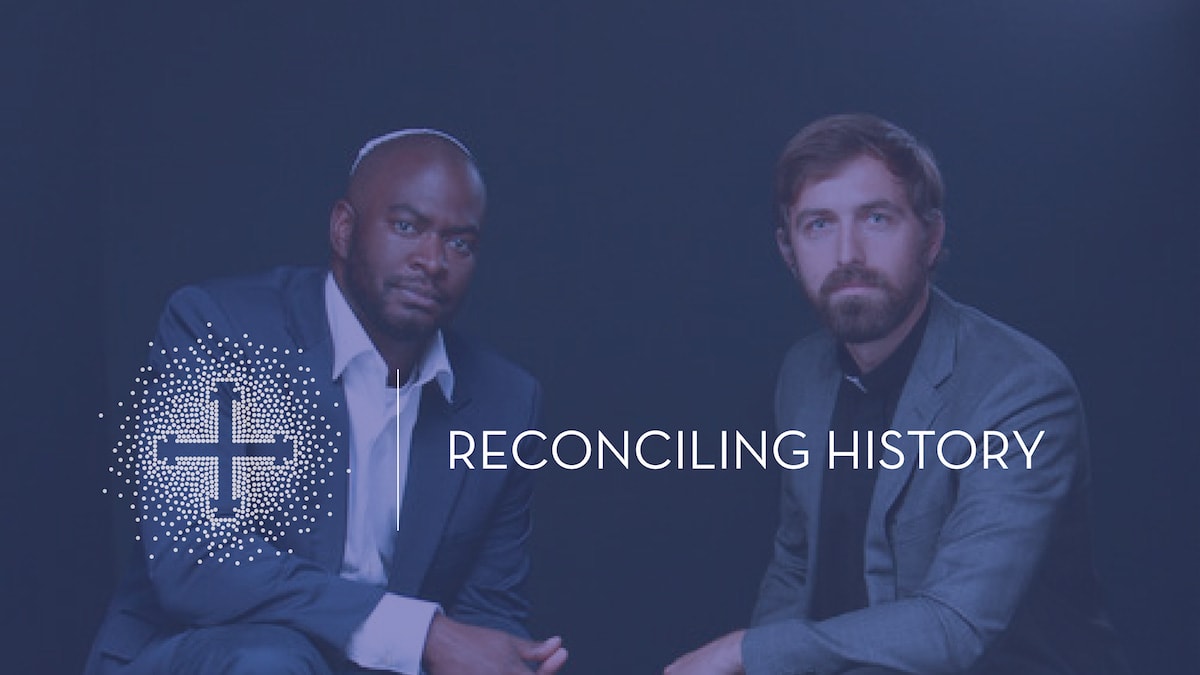
Through a partnership called the Georgetown Civil Rights Initiative, the Rev. Kurt Hein of Light of Christ Anglican Church is helping his community acknowledge the injustices of its past, and commit to treating all people as created in the image of God.
Kurt and another local pastor, Rabbi Jonathan Dade of the Messiah Echad Messianic Congregation, are working together to find a solution to a racially-charged dispute about a statue of a Confederate soldier on the lawn of Georgetown’s Williamson County Courthouse. Following the Charlottesville, Virginia shootings, some Georgetown residents asked for the removal of the 21-foot statue from courthouse grounds, believing it communicated a message of white supremacy. Some cities, like Baltimore, have chosen to remove their Confederate statues. But other Georgetown residents contend the statue represents an important piece of Texas history, isn’t hurting anyone, and should remain.
As the debate raged, Kurt and Jonathan, a friend he met at a pastors’ monthly support group, decided to take a different approach. After talking about the reality of race issues in their city, the two men formed the Georgetown Civil Rights Initiative, with a goal of facilitating constructive discussions about the various meanings the Confederate statue holds for people, and finding a compromise that will honor African Americans in Georgetown’s public square.
To Kurt, the statue, which has overlooked the lawn for more than 100 years, was just part of the landscape—until he began to try to see it through others’ eyes. “There are times like Charlottesville when you see people rallying around the Confederate monument with racist motifs,” he says. “Then you begin to question it. What is it that they’re seeing here? Why is it the rallying point?”
Rather than lobby for keeping or removing the statue, Kurt and Jonathan are seeking to address the underlying prejudice in people’s hearts.
“Jonathan and I wanted to approach this as pastors and think creatively about it,” Kurt says. “What could we do to create the space for our community to come together and confess, ‘Racism, segregation, and oppression are aspects of our history that we don’t want to be a part of—’ and then embrace together the ideals and values we strive for today as a community?”
To create that space, Kurt and Jonathan hosted a discussion group at a local restaurant in September, and invited two people in favor of keeping the statue, and two people against it. The group listened for the truth in both arguments and brainstormed together.
After hearing from both sides, Kurt and Jonathan proposed a compromise: leaving the statue of the Confederate soldier on the courtyard lawn, and erecting a second statue, one of a man breaking free of chains, to represent the emancipation of slavery. The accompanying plaque would read: Williamson County acknowledges our part in the injustices of slavery and segregation. We hereby embrace those who were once enslaved, their descendants, and all who have been delivered from chains of oppression, and we commit to treat all people as created equal, by God.
Their idea received initial favor in the Commissioner’s Court, but there is a long road ahead. Kurt and Jonathan will continue to talk with community leaders and officials, gaining support for the new statue. If approved, they will need to raise money to build it. But even in these early stages, Kurt and Jonathan pray that the proposed statue will be a catalyst for acknowledgement, forgiveness and equality in their city. Awareness is already growing as many local and national news outlets have picked up the story.
The two pastors’ goal of reconciliation resonates with both Light of Christ and Messiah Echad, the congregation Jonathan leads. Before getting involved in the Georgetown Civil Rights Initiative, Kurt says he talked to Light of Christ about what he hoped to accomplish.
“I told them, ‘You may see me on the news, and I need your prayer,’” Kurt says. “And I told them, ‘I want to model as your pastor and shepherd what it looks like for a Christian to be involved in the public sphere in a way that doesn’t compromise their faith but strengthens their witness.’ Light of Christ is a very diverse body. Practically, the issue of reconciliation is lived out in our church life around the Eucharist as the body of Christ broken for us and lifted up is the highest reality. That brings people together. We’re just living from that reality.”
Learn more about the Georgetown Civil Rights Initiative.